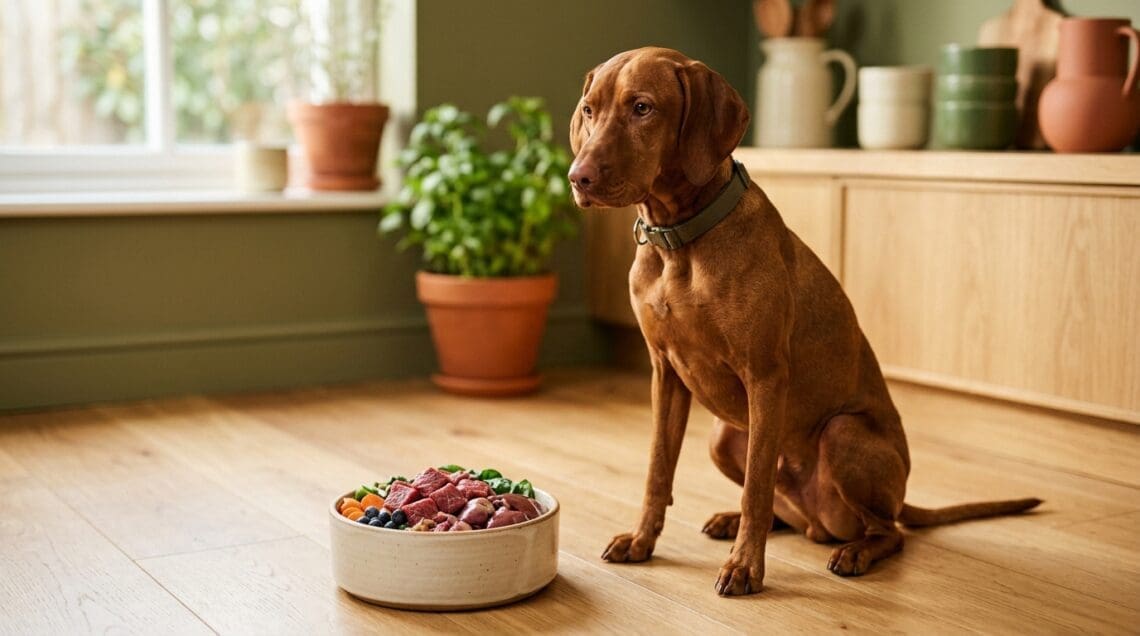
If you’ve ever stood in your kitchen, bag of food in hand, wondering whether you’re doing right by your dog — you’re not alone. “I want to switch to raw, but I don’t know where to start” is one of the most common things we hear.
So this is a guide to the actual decision, not a sales pitch: what raw feeding is, what changes when you make the switch, how much to feed, and how to tell whether it’s the right call for your dog. No jargon — just the things worth understanding before you change anything.
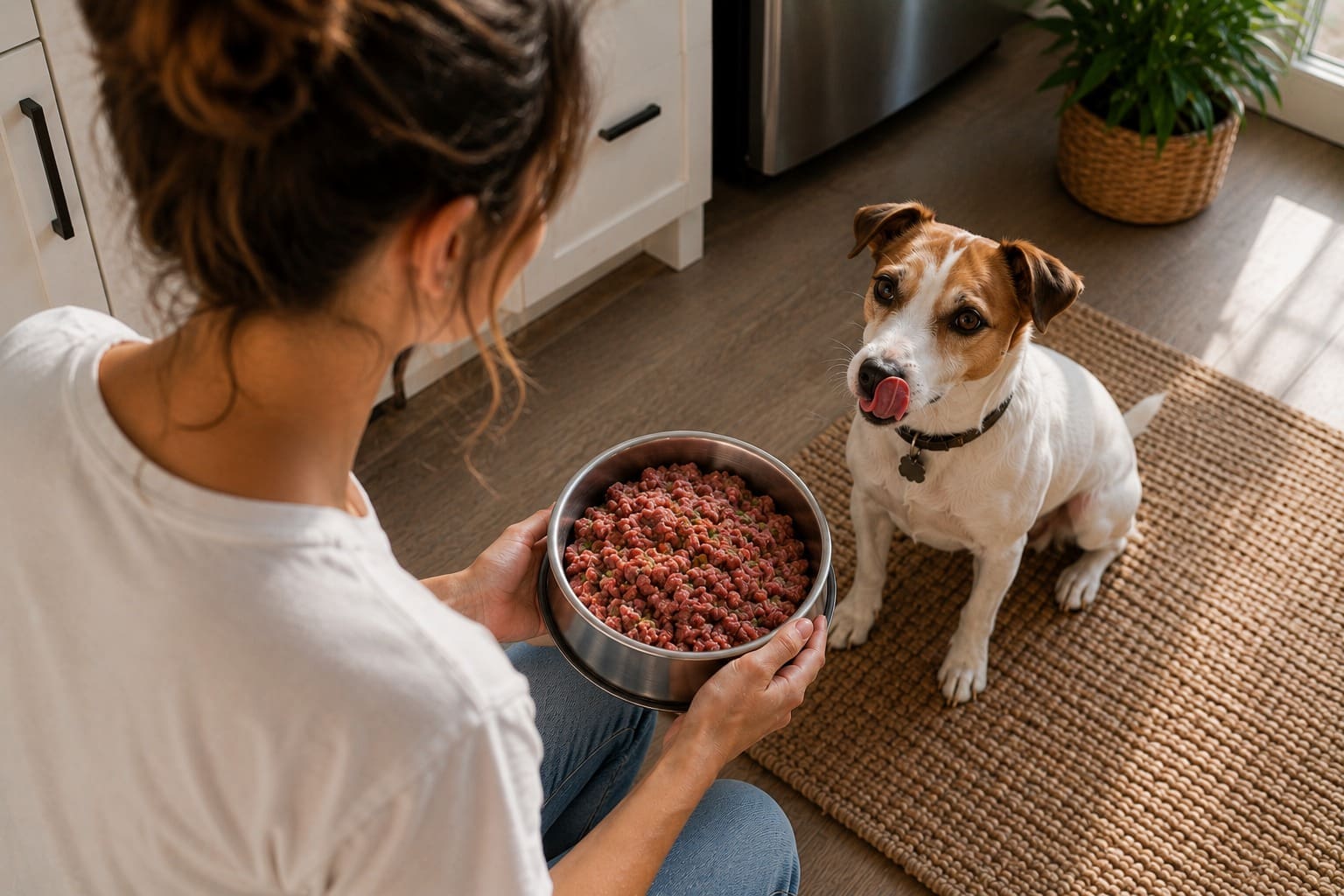
What raw feeding actually is
Dogs are facultative carnivores. Their teeth, their strongly acidic stomachs and their short, fast digestive tracts are all built to break down meat, bone and organ — not to ferment large amounts of starch. That biology hasn’t changed much in the time dogs have lived alongside us, even though the food on the shelf has changed enormously.
Raw feeding simply means going back to that: fresh, minimally processed food built around real animal protein, with the natural moisture left in. Dry kibble is a modern convenience — shelf-stable, cooked at high temperature, and bulked out with carbohydrates a dog has no real nutritional need for. Both will keep a dog alive. Only one matches how a dog is actually built to eat.
What changes when you switch
The changes owners notice most aren’t magic — they trace back to one thing: a dog digesting food it’s adapted to. A few of the common ones, and why they happen:
- Smaller, firmer stools. Without starchy fillers to bulk out and ferment, there’s simply less waste coming out the other end.
- Better coat and skin. Bioavailable protein and natural fats give the skin and coat the raw materials they need.
- Steadier energy. Fewer blood-sugar swings than a high-carbohydrate meal tends to produce.
- More moisture in the diet. Fresh food carries water the way a dog’s body expects, which supports digestion and hydration.
One honest note: these shifts take a few weeks, not a few days, and it’s normal for digestion to settle as your dog adjusts. Transition gradually rather than switching everything overnight.
How much should you feed?
This is the number most people actually want. As a starting guideline for raw feeding, per day:
- Adult dogs: 2–3% of ideal body weight
- Active or working dogs: 3–4%
- Puppies: 5–8%, calculated against their expected adult weight
So a 20 kg adult dog lands at roughly 400 g a day at 2%, or 600 g at 3% — usually split across two meals. But that’s a starting point, not a rule. Two dogs at the same 20 kg — say a Border Collie and a Bulldog — can need very different amounts. The real test is body condition: you should be able to feel the ribs easily and see a waist from above. Adjust up or down from there.
The three things beginners worry about
“Will I get the balance wrong?” Balance happens across the whole diet over time, not in every single bowl — the same way your own nutrition isn’t judged on one meal. Complete-and-balanced meals are formulated precisely so you don’t have to do the maths yourself.
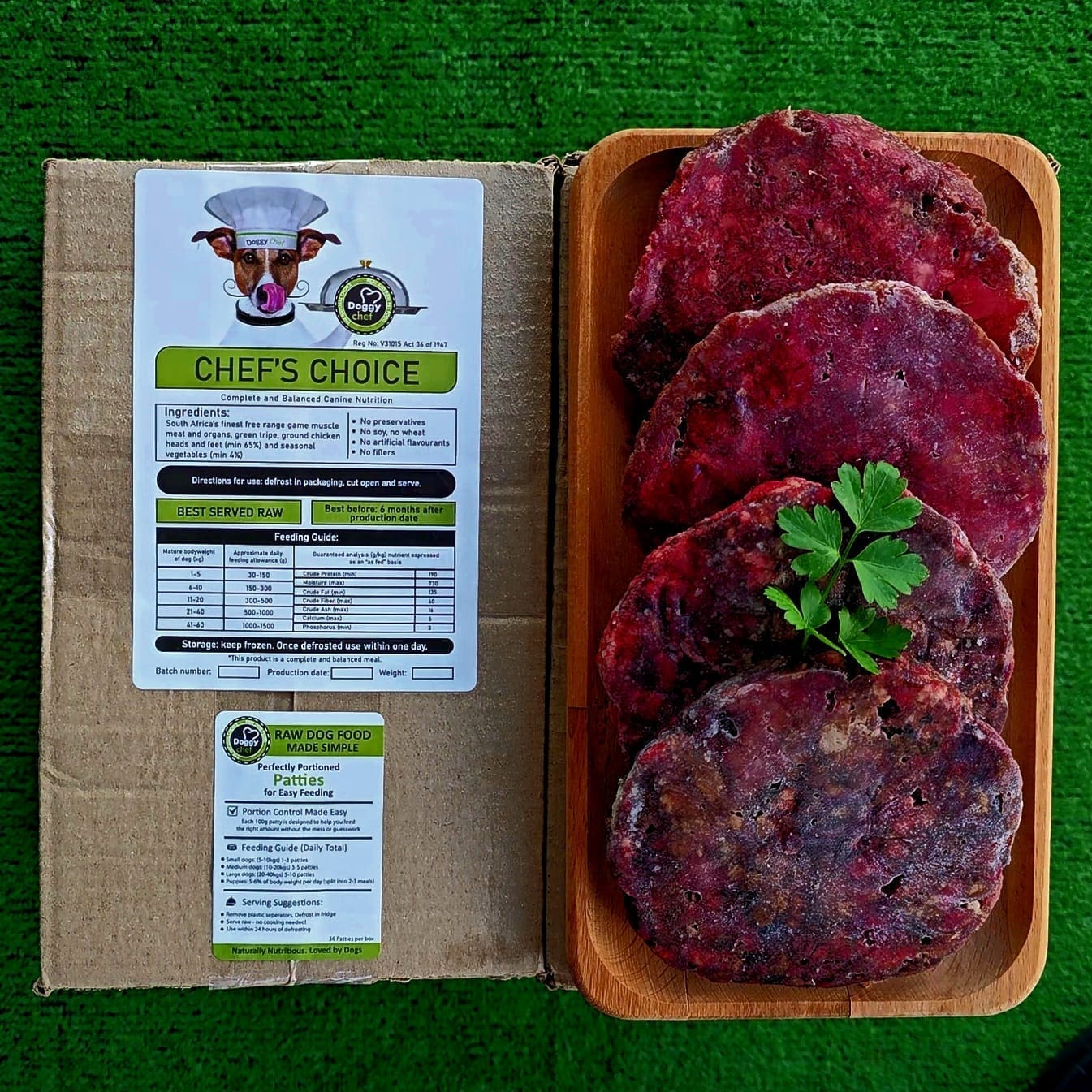
“Isn’t it a lot of work?” Sourcing, balancing and portioning from scratch genuinely is. Pre-portioned meals take that off your plate, which is the difference between raw feeding being a project and being a routine.
“Is it safe?” Handle it like any raw meat in your own kitchen: keep it frozen, thaw in the fridge rather than on the counter, and clean surfaces and bowls afterwards. In South Africa, raw pet food is required to be DAFF-registered, so buy from a producer who is.
Is raw feeding right for your dog?
For most healthy dogs, fresh species-appropriate food is a sound default. There are situations where it’s worth a conversation with your vet first — for example a dog that’s immunocompromised or has a specific medical condition, or a household with very young children or someone with a weakened immune system, where raw-meat handling needs extra care.
The point isn’t that raw is the only way to feed a dog. It’s that matching food to how a dog is built is a sensible place to start — and once you understand that, the rest of the decision gets a lot less overwhelming.
Key takeaways
- Dogs are facultative carnivores — built for meat, bone and organ, not starch.
- Raw feeding means fresh, minimally processed, moisture-rich real food.
- Start adults at 2–3% of ideal body weight, then adjust to body condition.
- Balance is about the whole diet over time, not a perfect single meal.
- Transition gradually, handle hygienically, and check with your vet if your dog has health concerns.
Still not sure where your dog fits? We’ll work out a personalised portion and plan based on your dog’s age, weight and activity level — so you don’t have to guess.