“Boost your pet’s immune system” is one of the most over-promised phrases in pet wellness — and one of the most misunderstood. A healthy immune system isn’t a dial you crank up; it’s a system you keep in balance. Push it too hard in the wrong direction and you get allergies and autoimmune disease; let it run down and infections take hold. The goal is a steady, well-regulated immune system — and diet is the foundation it’s built on.
A Quick Tour of the Immune System
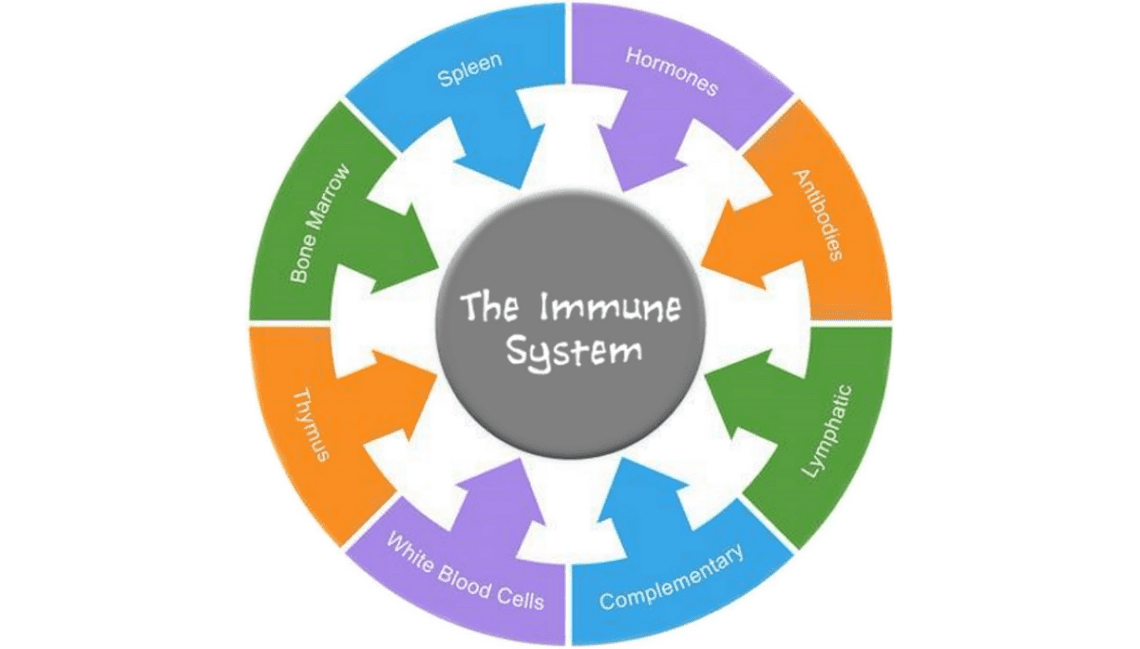
Your pet’s immune defence is layered: physical barriers (skin, and the lining of the gut and airways), white blood cells that patrol and respond, and the lymphatic system that moves it all around. It has two arms — the fast, general innate response and the slower, specific adaptive one that “remembers” past threats. You don’t need the textbook detail; you need one idea: balance is everything. A healthy immune system reacts to genuine threats and stands down from harmless ones. Most immune disease is a failure of that regulation, in one direction or the other.
Where the Gut Comes In
Here’s the part most “immune-boosting” products ignore: a large share of the body’s immune tissue lives in and around the gut — in fact it holds the single largest accumulation of immune cells in the body. The gut wall is both a physical barrier and an immune training ground, and the microbiome that lives on it helps calibrate immune responses across the whole body. That makes the digestive system one of the most important immune organs your pet has — and it’s why what goes in the bowl reaches so far beyond digestion. (Our gut-health and gut-brain articles go deeper on this.)
When the Immune System Gets It Wrong
Imbalance shows up in recognisable patterns — worth knowing so you can flag them to your vet, who is the right person to diagnose and manage any of them:
- Over-reaction to harmless things — allergies and atopic skin disease (see our allergies article).
- Reaction against the body’s own tissues — autoimmune conditions.
- Under-function — frequent or lingering infections.
So What Do I Feed? The Nutrition That Underpins Immunity
The immune system demands good nutrition — and a diet short of key nutrients almost inevitably shows up as immune trouble. You don’t build a balanced immune system with a supplement; you build it with a complete, species-appropriate diet that delivers the building blocks in usable form.
- The immune-relevant nutrients — vitamins A, C, E and B6; the minerals zinc and selenium; and essential fatty acids — are all supplied by a complete raw diet. Deficiency in any of them undermines immune function.
- Antioxidants from whole food, not pills. The antioxidant nutrients that support immune cells appear to work best in their natural, whole-food form rather than as isolated capsules — another argument for feeding food, not supplementing around a poor diet.
- Feed the gut, support the immune system. Because so much immunity is gut-based, a healthy microbiome is immune support: moisture-rich whole food, plus gut-friendly additions like green tripe and live-culture fermented foods.
- High-quality protein and omega-3s — the raw materials of immune cells and a calmer inflammatory baseline.
The honest framing: good food doesn’t “supercharge” immunity, and we won’t claim it does. It removes the deficiencies and the chronic inflammatory load that undermine a well-regulated immune system — and lets the body do what it’s designed to do. The rest — vaccination decisions, diagnosing and managing immune disease — belongs with your vet.
Key Takeaways
- Immunity is about balance, not “boosting.” Over- and under-reaction are both failures of regulation.
- The gut is a major immune organ — feed it well and you support immunity body-wide.
- Specific nutrients matter — vitamins A, C, E, B6; zinc; selenium; essential fatty acids — best delivered by a complete diet, not pills.
- Whole-food antioxidants beat isolated supplements.
- Food removes what undermines immunity — deficiency and chronic inflammation — rather than artificially revving it up.
- Vaccination and immune disease are veterinary decisions.
Sources
- National Research Council. Nutrient Requirements of Dogs and Cats. Washington, DC: National Academies Press; 2006. doi:10.17226/10668
- Algya KM, Cross TWL, Leuck KN, et al. Apparent total-tract macronutrient digestibility, serum chemistry, urinalysis, and fecal characteristics, metabolites and microbiota of adult dogs fed extruded, mildly cooked, and raw diets. Journal of Animal Science. 2018;96(9):3670–3683. doi:10.1093/jas/sky235
- Baillon ML, Marshall-Jones ZV, Butterwick RF. Effects of probiotic Lactobacillus acidophilus strain DSM13241 in healthy adult dogs. American Journal of Veterinary Research. 2004;65(3):338–343. doi:10.2460/ajvr.2004.65.338
* Disclaimer: This information is for educational purposes only and is not intended to replace the advice of your own veterinarian or doctor.