Walk down any pet food aisle and the bags tell a story in pictures: corn, carrots, sweet potato, peas. The message is that your pet needs these plants to be healthy. It’s a tidy story. It’s just not the one biology tells.
Here’s the short version, and the rest of this article is the evidence for it: your dog and cat are carnivores. Not omnivores. Not “opportunistic feeders.” Carnivores — even the Golden Retriever who steals apples off your counter.
That distinction isn’t pedantry. It quietly shapes every feeding decision you make.
Anatomy is the first witness
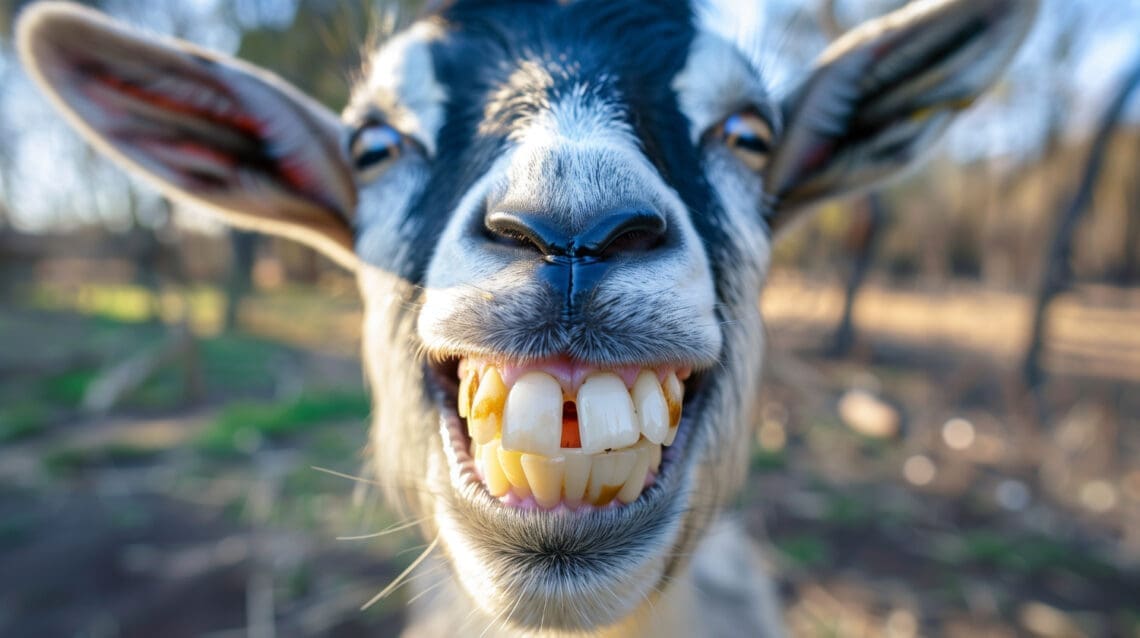
You don’t need a lab to start checking this. Open your dog’s mouth.
- Pointed canine teeth for gripping and holding — not flat-topped grinders.
- Carnassial teeth (the big back ones) that shear past each other like scissors, made for slicing meat and cracking bone.
- No broad grinding molars of the kind herbivores use to mill plant matter all day.
Compare that to a cow’s mouth, or even a true omnivore like a bear, and the difference is obvious. Cats take the same design further still — fewer teeth overall, even more pronounced shearing.
The gut tells the same story. A carnivore’s digestive tract is short and highly acidic — a stomach that drops to around pH 1–2, and an intestine roughly three to four times body length. That combination is built to move meat through fast and neutralise the bacteria that come with it. A herbivore runs the opposite system: a far longer tract (ten to twelve times body length), often with fermentation chambers, kept less acidic so plant-digesting microbes can do their slow work. Your dog is built on the carnivore plan, not the herbivore one — something we dig into in the digestive system your pet was born with.
The enzyme question — and the honest counter-argument
This is where the marketing claims usually wobble, and also where a lot of pro-raw writing overreaches. So let’s be precise.
True omnivores, including us, produce amylase in our saliva — the starch-digesting enzyme starts working the moment food hits the mouth. Dogs and cats produce none in their saliva. Their mouths simply aren’t set up to begin breaking down plants.
“But dogs produce amylase in the pancreas,” the counter-argument goes, “so they must be omnivores.” It’s a fair point, and worth answering honestly rather than dodging. Dogs did adapt to starch as they evolved alongside us — research has found they carry more copies of a key starch-digestion gene than wolves do. That adaptation is real. It’s also exactly what the word facultative means: a dog can digest and live with some starch in a way a strict carnivore can’t.
What it doesn’t show is that dogs are built around plants or thrive on a high-starch diet. Being able to cope with something isn’t the same as being designed for it. Humans can live on potatoes for a long stretch; that doesn’t make us herbivores.
The line that actually matters: obligate vs facultative
Both dogs and cats sit in the order Carnivora, but they’re not in the same spot on the spectrum.
Cats are obligate carnivores. They must have animal-source nutrition. The clearest proof isn’t an opinion — it’s heart muscle. Cats can’t make enough of an amino acid called taurine on their own, and taurine comes almost entirely from animal tissue. In the 1980s, researchers established that taurine-deficient diets caused dilated cardiomyopathy — a failing, enlarged heart — in cats, and that adding taurine back reversed it (Pion et al., 1987). A plant-based diet doesn’t just disagree with a cat; it can be fatal in a measurable, documented way.
Dogs are facultative carnivores. Built to run primarily on meat, but flexible enough — thanks to that starch adaptation — to survive on more varied food when they have to. Thrive on meat; get by on the rest.
The marketing sleight-of-hand is to take the dog’s “can get by” and rebrand it as “needs plants.” That’s like calling humans aquatic because we can swim.
Why the “omnivore dog” idea sticks around
A few honest reasons, no conspiracy required:
- Cost. Animal protein is expensive; plant ingredients are cheap. Formulating around grains and legumes is simply cheaper, and a lot of marketing follows the formulation rather than the biology.
- Limited nutrition training. Veterinary degrees cover enormous ground, and dedicated nutrition teaching is often a small slice of it. Many vets are passing on what they were taught in good faith.
- An evolution misread. Yes, dogs changed during 15,000-plus years beside us — the starch adaptation above is part of that. But their core machinery — tooth shape, stomach acidity, gut length — still reads carnivore.
What this means at the bowl
Knowing what your pet is changes how you read a label and fill a bowl:
- High-starch diets ask a lot of a digestive system that isn’t optimised for them.
- “Protein” on a label isn’t all equal — animal and plant proteins differ in amino-acid profile and how well a carnivore uses them (taurine being the textbook example).
- For many dogs, owners report digestion settling once the diet moves closer to what the species evolved on. That’s experience worth taking seriously — alongside, not instead of, your vet’s input.
The bottom line
Your dog and cat are carnivores. Anatomy, physiology and the hard evidence on nutrients like taurine all point the same way. The fact that a dog can survive on a plant-heavy diet no more makes it an omnivore than a human surviving on meat alone makes us carnivores.
When a chatbot or a feed bag tells you dogs are omnivores, keep the distinction in your pocket: coping isn’t thriving, and marketing isn’t science.
Next in this series: what happens when you cook your pet’s food, and why heat undoes much of what makes real food nourishing.
Key takeaways
- Dogs and cats sit in the order Carnivora; their teeth and gut match the carnivore template, not the herbivore one.
- Neither produces salivary amylase — plant digestion doesn’t even begin in the mouth.
- Dogs carry a real starch-digestion adaptation, which makes them facultative carnivores — able to cope with starch, not built to thrive on it.
- Cats are obligate carnivores: the taurine–heart link is documented proof they cannot live well without animal-source nutrition.
- “Can survive on plants” ≠ “designed for plants.”
Sources & further reading
- Pion PD, et al. Myocardial failure in cats associated with low plasma taurine: a reversible cardiomyopathy. Science, 1987. DOI: 10.1126/science.3616607
- Axelsson E, et al. The genomic signature of dog domestication reveals adaptation to a starch-rich diet. Nature, 2013. DOI: 10.1038/nature11837