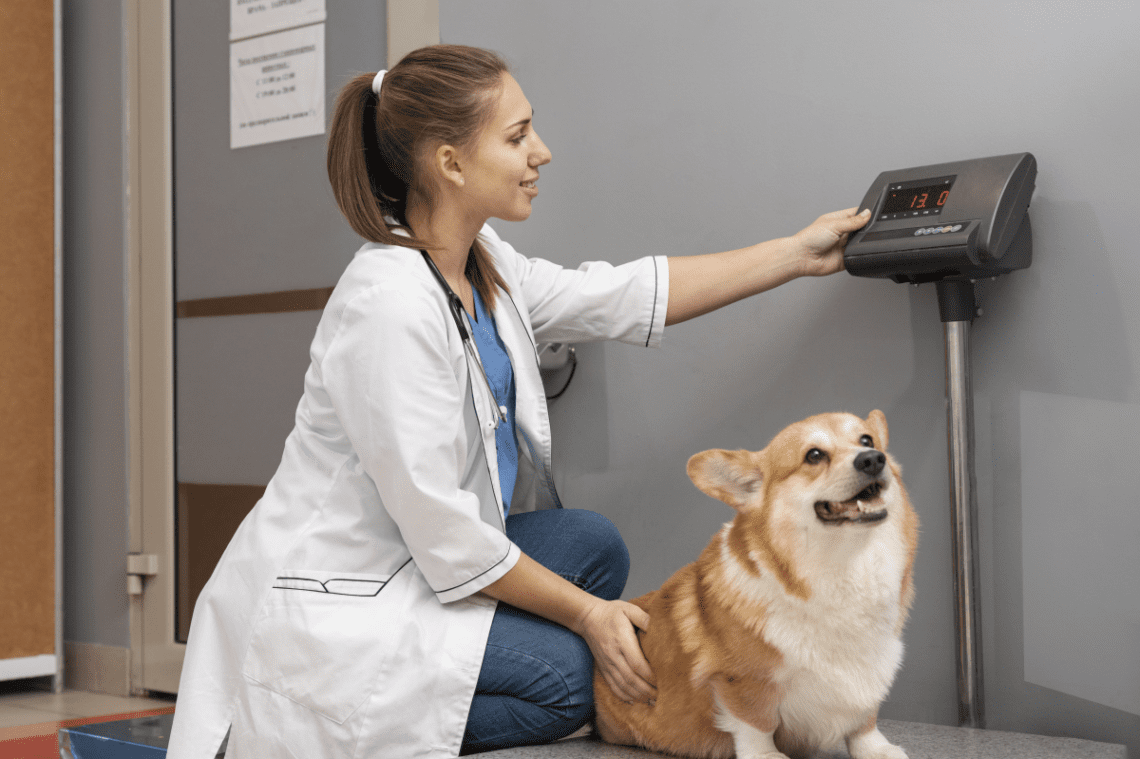
It’s the most common disease in pets today, and the most quietly accepted: obesity. We define it as carrying at least 15% more weight than is healthy for the pet’s frame — and here’s the uncomfortable truth at the centre of it. In the wild, almost no animal is obese. Our pets aren’t born this way; with rare exceptions, we make them this way. That’s not a guilt trip — it’s the good news, because it means the fix is largely in our hands.
(One myth to retire first: spaying/neutering doesn’t cause obesity. It can lower energy needs — so if we don’t adjust the calories down to match, weight creeps on. The lever is still the bowl.)
Why Obesity Is a Disease, Not Just Extra Padding
Fat used to be thought of as inert storage. We now know better: body fat is an active endocrine organ. Fat cells release hormones and signalling proteins (adipokines) that reach across the whole body — nudging appetite, inflammation, insulin sensitivity and metabolism. The more fat there is, the louder those signals, and the more they push the body toward further weight gain and disease. That’s why obesity drives so much else:
- Physical: joint pain and arthritis, ligament and disc problems, increased diabetes risk, heart and breathing strain, reduced stamina, higher surgical and anaesthetic risk, skin and coat trouble.
- Emotional / quality of life: lethargy, lower activity, irritability — and, bluntly, a shorter life.
That last point isn’t a figure of speech. In a landmark lifelong study, Labradors kept lean simply by being fed 25% less than their litter-mates lived a median of around 1.8 years longer — and developed arthritis and other age-related diseases noticeably later. Staying lean is one of the very few things ever shown to genuinely extend a dog’s healthy life.
A practical note: the scale alone can mislead. A body-condition score — can you feel the ribs without pressing? is there a waist from above and a tuck from the side? — is a better everyday gauge than weight in kilograms.
First, Rule Out a Medical Cause
Before any diet starts, get a vet blood profile. An underlying disorder — hypothyroidism, Cushing’s, diabetes — is present in only about 5% of obese dogs, but if your pet is one of them, no diet will work until it’s treated, and pushing a weight-loss programme without screening can do real harm. Screen first, then act.
What NOT to Feed: The “Diet Food” Trap
Here’s the counter-intuitive part. The answer to obesity is not a bag of commercial “low-fat” or “weight-reduction” kibble — and these can actively make things worse. Most are built on the same trick:
- “Low fat” but high carbohydrate. They swap fat for starch (corn, wheat, rice, potato) — and excess carbohydrate is simply converted to and stored as fat. Low-fat is not low-calorie.
- Bulked out with non-nutritive fibre. The theory is that fibre makes a pet feel full. It does — but a full stomach isn’t a fed body. Excessive fibre (some weight-loss formulas run as high as 27%, versus the ~8% appropriate for a carnivore) acts as a barrier, blocking absorption of vitamins, trace minerals and antioxidants.
The result is the cruel paradox so many owners describe: a pet that’s still overweight yet constantly ravenous — begging, raiding bins, hoovering up everything on walks — because it’s being filled but not nourished. Owners then feed more, and the pet gets fatter and more undernourished at once.
So What Do I Feed? Real Food, Fed for the Target Weight
A species-appropriate raw diet is, in our experience, one of the most effective ways to bring an overweight pet back to a healthy condition — and the reason is exactly the paradox above in reverse: it nourishes at the cellular level, so satiety actually arrives. A well-fed body stops nagging for more.
- High-quality protein (muscle meat, organ and bone) — satisfying and metabolically useful, with no empty starch.
- Low to moderate animal fat, matched to activity level.
- Omega-3s (EPA/DHA) for their anti-inflammatory role.
- High moisture, no grains or starch fillers — volume and satisfaction without the carbohydrate calories.
“Will raw make my dog fat?” Rarely — and when weight gain is reported, it’s almost always simple over-portioning. Which brings us to the two levers that actually move the needle:
- Portion control, every single meal. The commonest reason for “I’m doing everything right and she’s still heavy” is feeding for the current weight, not the target weight. It’s the calorie deficit that tells the body to burn stored fat. Measure morning and evening meals — and count the treats, bones and chews.
- Daily exercise. Fewer calories in, more energy out: aim for at least 20 minutes of consistent activity a day to build muscle and protect the joints.
Why Weight-Loss Programmes Fail
- Skipping the vet screen — an undiagnosed disorder makes any diet futile (or dangerous).
- “Lite” diets — feeding less of the wrong food just makes a pet hungrier and slows the metabolism to match.
- Crash-starving — burns muscle as well as fat and can cause metabolic harm; not the answer.
- Impatience — obesity didn’t arrive overnight and won’t leave overnight. Large dogs can need many months of steady, correct feeding.
Key Takeaways
- Obesity is a disease we mostly create — and can mostly undo.
- Fat is an active endocrine organ, which is why obesity drives diabetes, joint disease and more.
- Staying lean extends healthy life — by close to two years in the landmark study.
- Commercial “diet food” often backfires — low-fat but high-carb and fibre-padded, leaving pets full yet starving.
- Real food nourishes, so satiety arrives — and weight comes off.
- Feed for the target weight, portion every meal, count the treats, and exercise daily — and screen with your vet first.
Sources
- German AJ. The growing problem of obesity in dogs and cats. The Journal of Nutrition. 2006;136(7):1940S–1946S. doi:10.1093/jn/136.7.1940S
- Kealy RD, Lawler DF, Ballam JM, et al. Effects of diet restriction on life span and age-related changes in dogs. Journal of the American Veterinary Medical Association. 2002;220(9):1315–1320. doi:10.2460/javma.2002.220.1315
- National Research Council. Nutrient Requirements of Dogs and Cats. Washington, DC: National Academies Press; 2006. doi:10.17226/10668
* Disclaimer: This information is for educational purposes only and is not intended to replace the advice of your own veterinarian or doctor.